3 Wheel Omni Drive
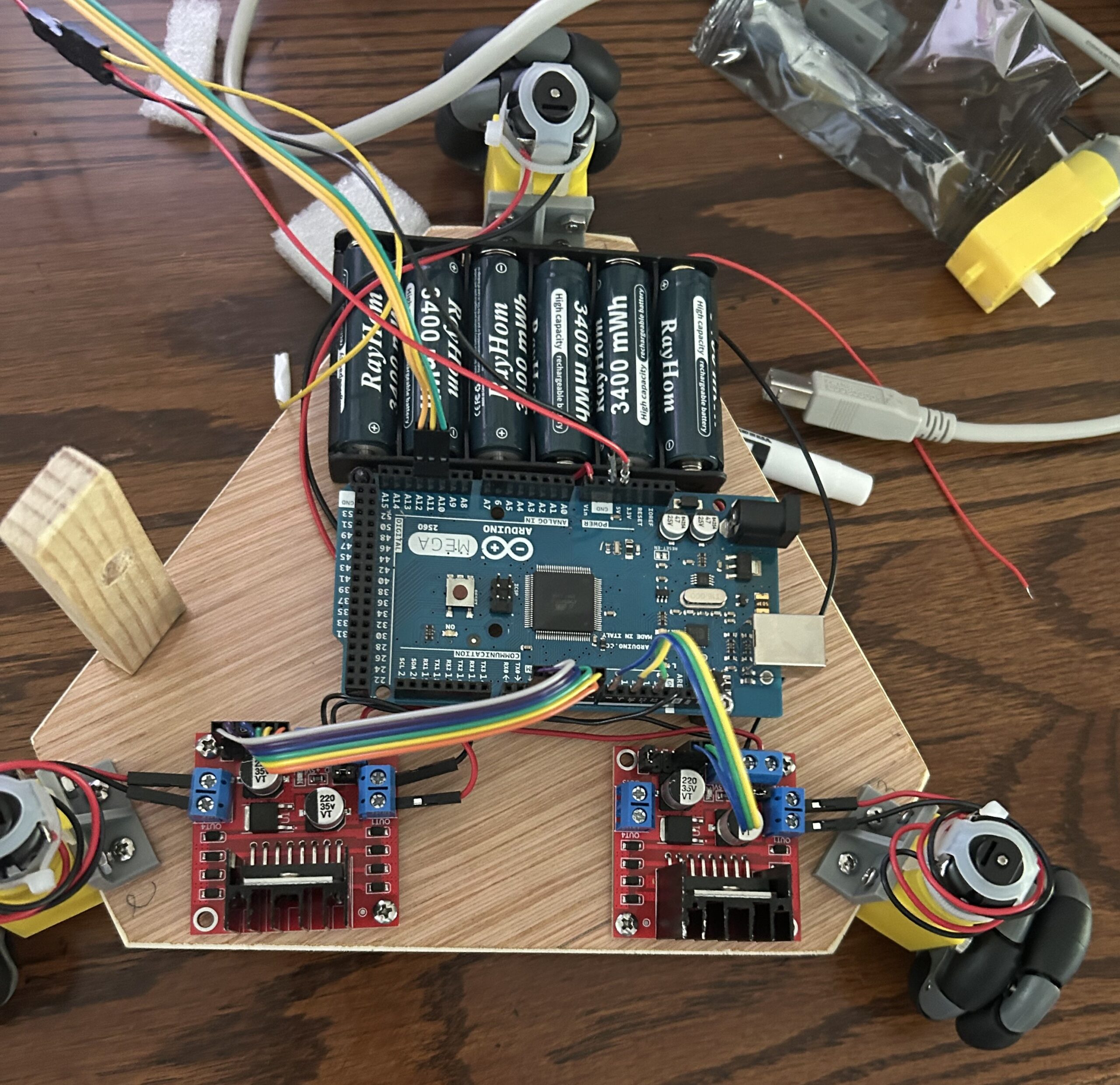
By changing the velocities of the three wheels the robot is able to move in any direction while rotating, regardless of orientation. This project introduced me to Arduino, teaching me how to use C++, vector math, and wiring
Although a good first project, it was riddled with issues the motors were imprecise, the battery pack was large and clunky, and the wiring was very messy.
PARTS:
Controller: 1x Arduino Atmega
Motors: 3x TT Motor dual DC 3-6V 1:48
Motor Controller: 2x HiLetgo L298N Dual H-Bridge
Battery: 6x AA rechargeable batteries
Additional Parts: 1x Antenna + 1x Remote Control (not pictured)
Swerve Drive V1-Differential
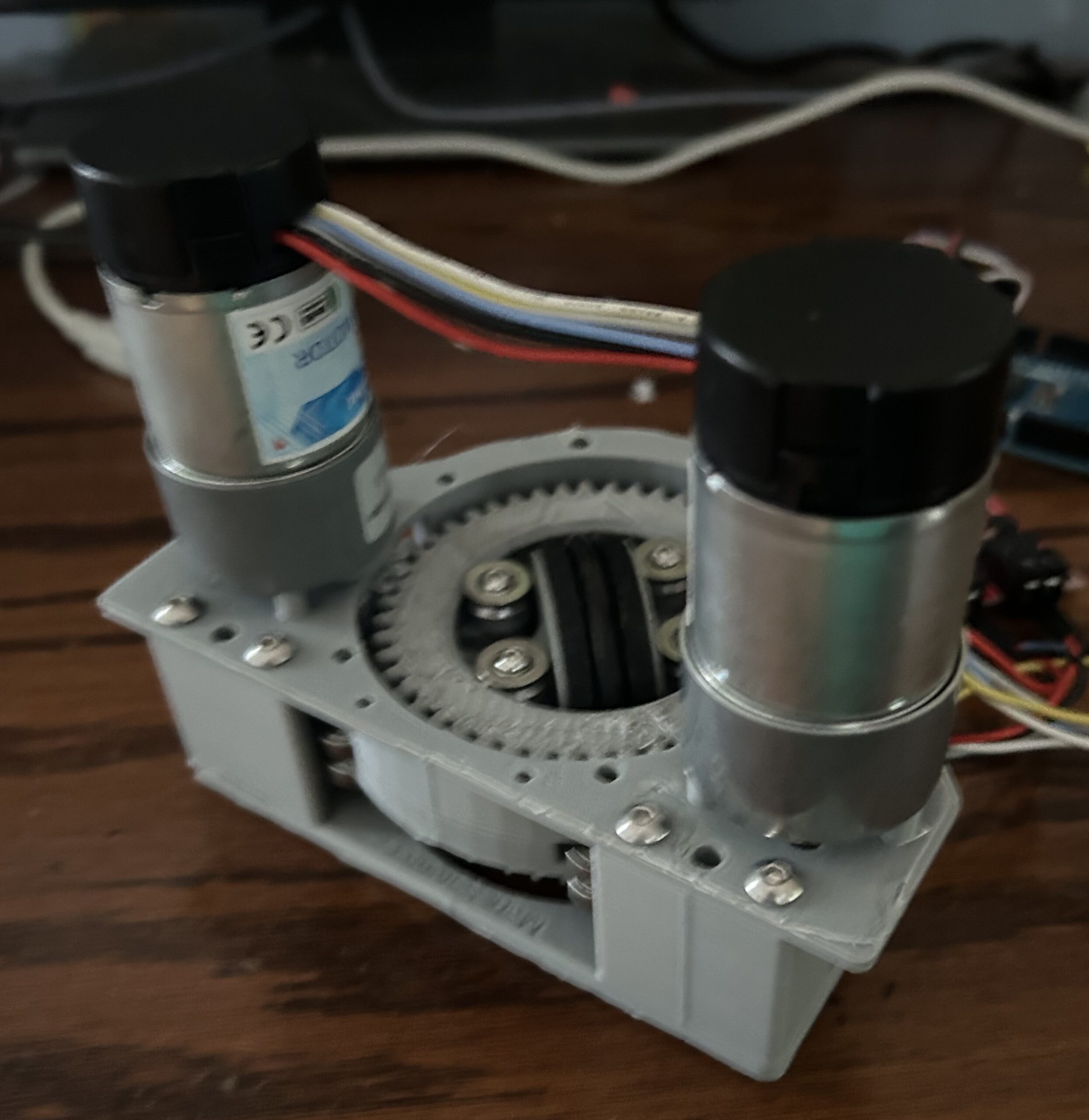
Swerve is the dominant drivetrain used by FIRST robotics teams, of which I am apart of. This got me interested into how the drivetrain works, leading me to try and create something similar.
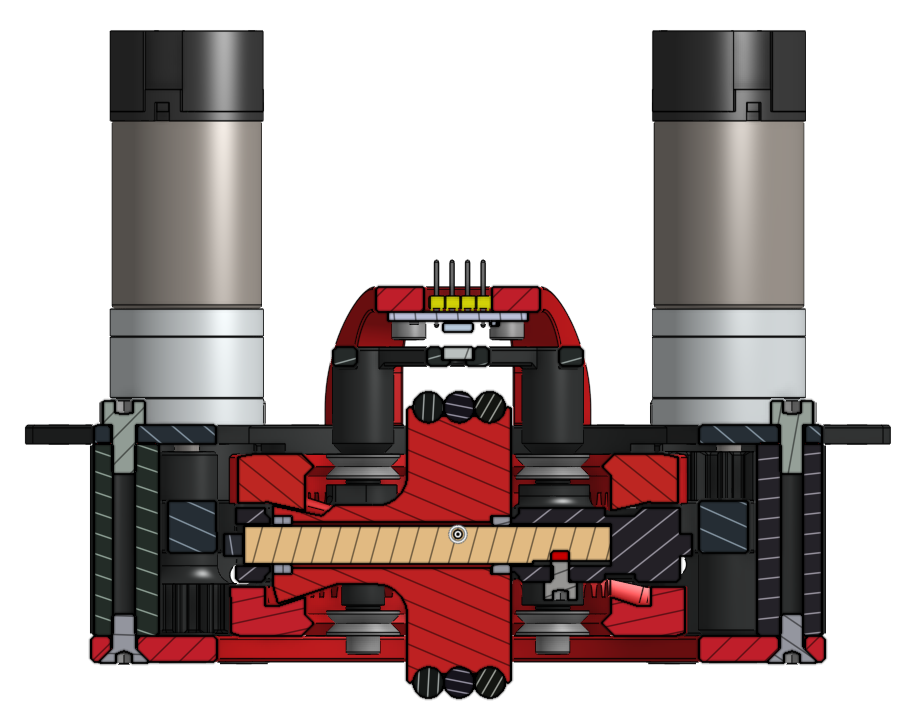
This is a differential drive, meaning it uses the sum and difference of the two motors to either rotate, drive, or both. There is also a coaxial drive that accomplishes the same goal but has separate motors for rotation and driving. I decided on a differential drive because there were printable models publicly available, the one I used was designed by Mark Sommers.
The robot communicates via Bluetooth using the ESPNOW protocol, with one ESP32 on the robot, and another connected to joysticks.
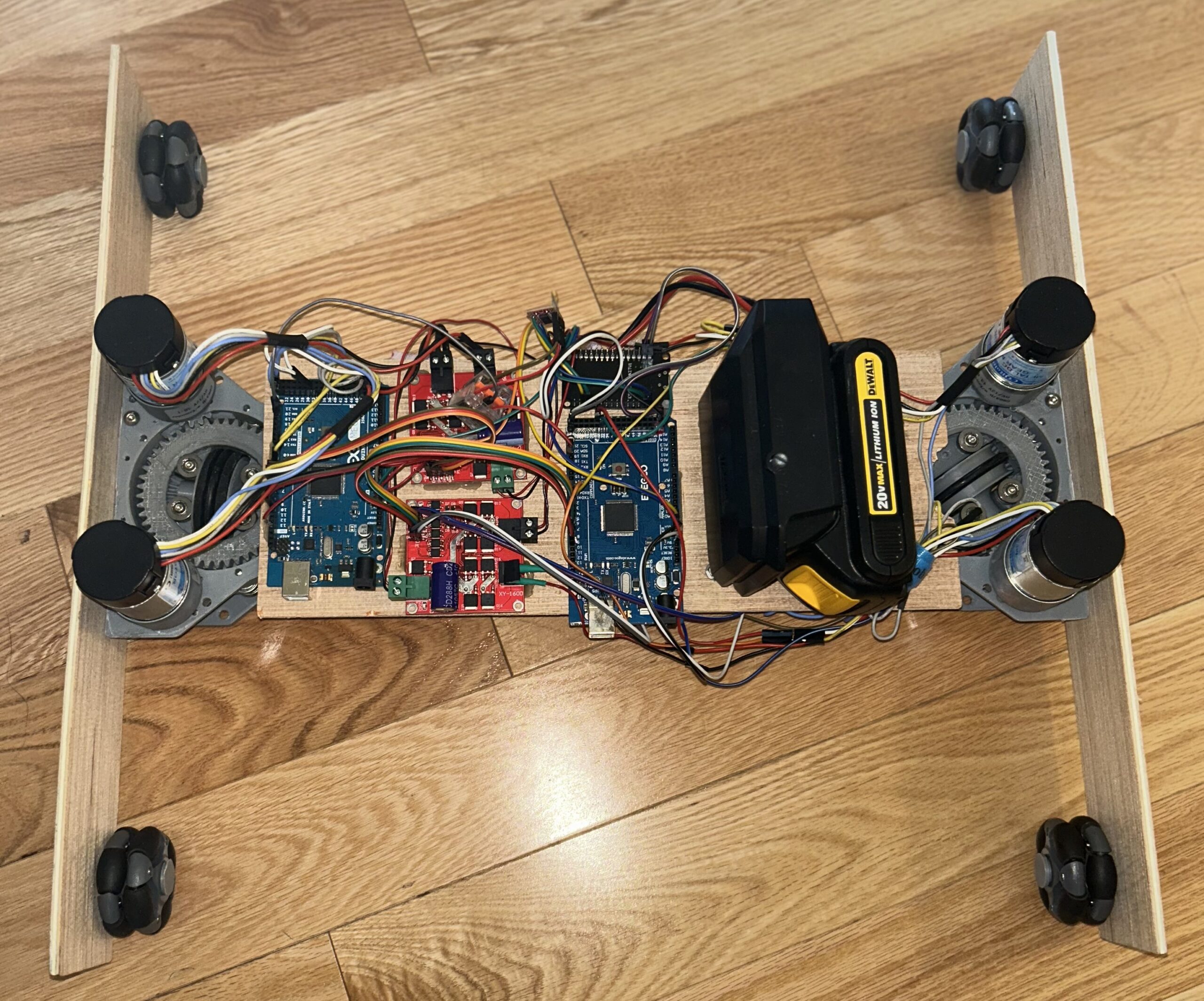
Once I got far enough into the project, I realized that what had was imprecise, difficult to control and simply not good enough, this led me to do a complete teardown, and build back from the ground up, designing my own coaxial swerve modules.
PARTS:
Controller: 2x Arduino Atmega, 2x ESP 32
Motors: 2x CQ Robot DC Gearmotor 30:1 2x CQ Robot DC Gearmotor 43.8:1
Motor Controller: 2x DROK L298 12V Dual H-Bridge Motor Speed Controller
Battery: 1x 20V DeWalt Drill Battery 1x DeWalt Drill Battery Adapter.
Additional Parts: 2x 3d Printed Swerve Modules + Necessary Bearings
Swerve Drive V2-Coaxial
Type your paragraph here